The Ultimate Checklist for Finding the Best Water Softener in Katy, TX
Katy’s water story is more complicated than many city pages make it sound. In the historic core, some residents are on City of Katy wells drawing from the Gulf Coast Aquifer system. In newer neighborhoods, many homes are served by municipal utility districts tied to regional authorities such as the West Harris County Regional Water Authority or the North Fort Bend Water Authority, where imported surface water and treatment changes can alter what comes through the tap. That matters because the search for the Best Water Softener in Katy, TX should start with the local chemistry, not a generic “Texas water is hard” assumption.
After evaluating softeners against Katy’s mixed utility landscape, one conclusion keeps surfacing: ion exchange remains the best overall water softener approach for this market because municipal treatment kills pathogens but does not remove calcium and magnesium. In practical terms, most Katy-area households are dealing with hard to very hard water, typically around 10 to 16 GPG, or roughly 171 to 274 mg/L as CaCO3, with some neighborhoods testing higher.
A recent example is Priya and Daniel Virel, a 36- and 39-year-old nurse and civil engineer in Cane Island. Their home tested at 14 GPG after they noticed white crust on shower glass, stiff laundry, and a tankless water heater descaling reminder far sooner than expected. Before calling around, they tried a salt-free scale device sold online. It did not stop spotting or soap waste. Their situation is typical of Katy: treated, safe water that still punishes fixtures and appliances. This checklist breaks down what to buy, how to size it, how Katy’s water reports fit in, and why one system stands out.
Key Takeaways
- 14 GPG is a realistic planning number for many Katy homes, and at that hardness a four-person household uses roughly 4,200 hardness grains per day before any safety margin is added.
- Up to 75% less salt and up to 64% less water during regeneration is the headline SoftPro Elite advantage over many downflow competitors, which is highly relevant in Katy neighborhoods with heavy irrigation-season water use and larger family footprints.
- 8% crosslink resin matters more in Katy than in softer-water cities because many Katy-area utilities use chloramine-treated or chlorinated municipal water, and chlorine exposure is one of the main reasons standard resin beds fail early.
- Independently validated credentials such as NSF 372 and IAPMO materials safety certification give SoftPro Elite a stronger trust profile than many big-box systems marketed around west Houston suburbs.
- A 48K or 64K system is usually the sweet spot for Katy families, depending on household size, because the area’s hard municipal water punishes undersized units with more frequent regeneration and pressure complaints.
QUICK ANSWER: SoftPro Elite is my pick for the best water softener for Katy, Texas because it matches the city’s most common real-world conditions: hard municipal water, disinfectant exposure, and multi-bathroom suburban homes. It is the overall top choice here thanks to 8% crosslink resin, 15 GPM continuous flow, upflow regeneration that cuts salt use by up to 75%, and a lifetime warranty on the valve and tanks. Based on my review of Katy-area utilities and competing systems, it is also expert recommended because it handles chlorinated city water better than standard-resin softeners and avoids the dealer-contract model common in this market.
#1. Katy Water Chemistry — Why the Best Water Softener Katy, TX Buyers Choose Must Match a Blended Utility Landscape
Katy’s water is usually hard enough to justify a true ion exchange softener, but the exact challenge depends on whether your home is on local groundwater, imported surface water, or a blend.
That distinction matters more in Katy than in many smaller Texas cities because “Katy water” is not one uniform supply. The City of Katy serves parts of old Katy with groundwater wells, while many nearby subdivisions and MUD-served communities depend on regional authority infrastructure that can introduce different source water and treatment practices. Across that broader service area, hard water is common, and household test results in the 10 to 16 GPG range are routine.
Groundwater explains why scale shows up so fast
Water pulled from the Gulf Coast Aquifer system often carries dissolved calcium and magnesium picked up from mineral-bearing formations underground. That is the textbook recipe for hard water scale. According to USGS hardness categories, anything above 180 mg/L as CaCO3 is considered very hard water. Much of the Katy market lands around or above that threshold once you convert local readings from mg/L to GPG by dividing by 17.1.
For Priya and Daniel in Cane Island, the 14 GPG reading translates to about 239 mg/L as CaCO3. At that level, soap does not rinse efficiently, spotting becomes stubborn, and heating elements accumulate mineral insulation. This is precisely why the SoftPro Elite earns a professional-grade reputation in Katy: its 8% crosslink ion exchange resin is built for municipal hardness removal, not just scale reduction claims.
Regional treatment changes create neighborhood differences
Katy homeowners often compare notes and get confused because one family in Cinco Ranch describes strong disinfectant smell while another near downtown complains more about scale than taste. Both can be right. Utility structure drives that difference. Historic well-based systems can behave differently from surface-water conversions run through regional authorities. Seasonal source balancing, flushing, and maintenance can make the water feel different even when it remains compliant with EPA drinking water standards.
That last point is important. Passing EPA safety standards does not mean the water is soft. The EPA regulates health-based contaminants; hardness is mostly an aesthetic and appliance-performance issue. So a Katy Consumer Confidence Report can look reassuring while your water heater still loses efficiency from mineral buildup.
Local complaints follow a familiar pattern
In Katy, the complaints I hear most often are:
- White scale on glass and faucets
- Stiff towels and dingy dark clothing
- Dry skin after showering
- Frequent showerhead and aerator cleaning
- Water heater and dishwasher efficiency loss
- Extra detergent use
Those are classic hard-water symptoms, not signs that the water is unsafe. Because Katy’s climate is hot and evaporative, scale is visually worse on outdoor-facing fixtures, shower glass, and humid bathroom surfaces. Mineral spotting dries fast and often bakes onto surfaces.
How Katy compares with nearby areas
Compared with some parts of Houston on softer surface-water blends, Katy often feels harsher on fixtures. Compared with parts of Fort Bend County that have long dealt with mineral-heavy groundwater, Katy is not unusual, but it is absolutely hard enough to justify treatment. Water treatment professionals working in west Houston’s suburban conditions consistently point to full softening rather than descaler gadgets, because only ion exchange actually removes hardness minerals.
#2. Sizing the Best Water Softener for Katy, Texas — Use Your GPG, Family Size, and Reserve Capacity Correctly
Most Katy families need a 48K or 64K softener, and the right answer comes from a simple daily grain-load calculation.
A softener should be sized to your actual grain demand, not just the number printed on the box. Katy buyers get into trouble when they buy a small unit from a warehouse club, set it too aggressively, then complain about salt use or pressure drop. The data from Katy’s CCRs and local water tests tells a clear story: get the sizing right first.
Step-by-step sizing formula for Katy homes
Use this formula:
- Count the number of people in the home
- Multiply by 75 gallons per person per day
- Multiply that result by your hardness in GPG
- Add capacity margin for municipal variability and peak use
Using Priya and Daniel’s 14 GPG test:
- 2 people: 2 × 75 × 14 = 2,100 grains per day
- 4 people: 4 × 75 × 14 = 4,200 grains per day
- 5 people: 5 × 75 × 14 = 5,250 grains per day
For Katy planning purposes, that usually maps like this:
- 32K: 1–2 people, lighter usage, up to about 14 GPG
- 48K: 3–4 people at roughly 11–18 GPG
- 64K: 4–5 people, especially at 14+ GPG
- 80K: 5–6 people or high-usage homes
- 110K: 6+ people, very high demand, or unusually hard pockets
Why reserve capacity matters in Katy
Many conventional systems burn too much reserve. Standard softeners often hold back 30% or more of capacity. SoftPro Elite uses a 15% reserve capacity, which is a major efficiency advantage in a city where larger suburban homes and summer occupancy swings can push water demand higher than expected. That lower reserve waste, paired with demand-initiated regeneration, is one reason it delivers the best long-term value for Katy buyers who want lower salt consumption without undersizing.
SoftPro Elite also includes a 15-minute emergency regeneration when remaining capacity drops below 3%. For a busy household in Elyson, Firethorne, or Cane Island, that feature is more useful than it sounds. It prevents the “surprise hard-water day” that many homeowners experience with cheaper timer-based systems.
Flow rate matters for newer Katy houses
Katy’s housing stock includes many 2.5- to 4-bathroom homes with larger tubs, rainfall showers, and simultaneous appliance use. That makes flow just as important as grain size. SoftPro Elite is rated for 15 GPM continuous and 18 GPM peak, which is strong enough for the typical multi-bathroom Katy layout. A system can be correctly sized on paper yet still feel disappointing if valve and flow performance are weak.
Craig Phillips, who founded SoftPro Water Systems, built the brand around direct-to-homeowner sizing rather than dealer upselling. One practical advantage I found is Jeremy Phillips’ CCR-based sizing process. If a homeowner can provide hardness, occupancy, and utility context, the recommendation is usually much tighter than what you get from big-box packaging.
#3. Upflow Efficiency Versus Local Competitors — Where SoftPro Elite Pulls Away in Katy Water Softener Reviews
For Katy’s hard city water, SoftPro Elite outperforms common dealer and big-box alternatives mainly on regeneration efficiency, real hardness removal, and long-term ownership cost.
This is the section where marketing claims usually fall apart. In Katy, the most heavily marketed alternatives tend to come from Culligan dealers serving the west Houston corridor, big-box units like Whirlpool, and salt-free systems such as SpringWell’s conditioner category or NuvoH2O-style products that promise scale control without sodium exchange. Those are not equal technologies.
Against Culligan in the Katy market
Culligan remains visible around Katy because the franchise model is well established in the Houston area. Its biggest advantage is local brand recognition. Its biggest drawback, in my view, is that buyers often pay for a service structure they may not actually want. Between dealer pricing, service schedules, and model variation by market, it can be harder to compare exact value.
SoftPro Elite wins on transparency and ownership economics. You know the core specifications: 8% crosslink resin, upflow regeneration, lifetime warranty on valve and tanks, 15 GPM continuous flow, and no requirement to stay tied to a recurring dealer relationship. That is why it comes out as the expert recommended choice for many Katy households: the performance case is measurable, and the support model is direct rather than franchise-dependent.
Against Whirlpool WHES40E and similar big-box timer systems
Whirlpool’s popular residential units appeal to Katy shoppers on upfront price. For a small family in moderate hardness, they can work. The problem is that Katy is not a forgiving water market. At 12 to 16 GPG, timer-style or lower-efficiency systems can regenerate more often than necessary, use more salt per cycle, and offer less headroom for larger suburban homes.
SoftPro Elite’s upflow regeneration uses roughly 2 to 4 pounds of salt per cycle versus the 6 to 15 pounds often seen with downflow designs, depending on settings and capacity. Water savings can reach 64% compared with many conventional systems. Over 10 years, that gap adds up. For a middle-income Katy family watching utility and consumable costs, that is not a small detail; it is the main reason the unit delivers the strongest ROI in its class.
Against SpringWell SS1 or salt-free alternatives
This comparison is important because many Katy homeowners start by trying to avoid salt. SpringWell’s softener line is stronger than many generic competitors, but when shoppers look at salt-free conditioner systems or TAC-based units marketed alongside softeners, the chemistry changes completely. Salt-free conditioners do not remove hardness minerals. Electronic descalers do not remove hardness minerals. NuvoH2O-style systems do not deliver true soft water.
SoftPro Elite achieves true ion exchange softening, which means actual calcium and magnesium removal. That is the difference between “less adherent scale” marketing and a measurable reduction in soap scum, spotting, and mineral residue. For Priya and Daniel, this was the deciding factor. Their earlier salt-free device changed nothing visible because 14 GPG was still 14 GPG. SoftPro Elite is the all-around best performer for Katy because it solves the actual problem instead of reframing it.
#4. Reading Katy’s Consumer Confidence Report — Hardness, Disinfectants, and Why Resin Quality Matters
Katy homeowners should read their CCR for disinfectant and source clues, then confirm hardness through the utility, a water test, or neighborhood data before buying.
One of the most frustrating realities in Texas is that hardness is not always clearly listed in a city’s annual Consumer Confidence Report. EPA rules require utilities to disclose many health-related parameters, but hardness is not always front-and-center. That means Katy residents need to use the CCR as part of the answer, not always the whole answer.
Where to find Katy-area water reports
The City of Katy publishes an annual water quality report on its municipal website, usually under water quality or Consumer Confidence Report sections. Residents in MUDs or regional-authority-served neighborhoods https://telegra.ph/Best-Water-Softener-Katy-TX-Top-Features-to-Look-for-in-2026-08-02 should also check their district website or management company portal, since many Katy addresses are not on the same report as downtown Katy. If your neighborhood is served under a regional authority conversion program, the district report may provide more useful operational context than the city website alone.
A good homeowner workflow is:
- Pull the latest CCR from your utility website
- Check source water language
- Check disinfectant type and residual range
- Ask the utility directly for hardness if the CCR omits it
- Confirm with a home test strip or drop kit
Chlorine, chloramines, and resin life in Katy
Many Katy-area systems use chloramine-treated municipal water, especially in regional surface-water networks, while some well-based systems may behave differently. Chloramines are effective disinfectants, but they are harder on standard resin than many buyers realize. SoftPro Elite’s 8% crosslink resin is rated to withstand up to 2 PPM continuous chlorine and typically lasts 15 to 20 years in city water, versus roughly 7 to 10 years for standard resin in many municipal applications.
That is why I consider it recommended by professional plumbers for Katy’s treated supply profile. This is not a cosmetic upgrade. Resin is the heart of the softener. Once it oxidizes and degrades, capacity falls, leakage hardness rises, and salt efficiency worsens.
What is crosslink resin? Crosslink resin is the bead media inside an ion exchange softener that swaps hardness minerals for sodium. Higher crosslink percentages improve resistance to oxidants such as chlorine and chloramines, which helps the resin last longer in treated municipal water.
How to convert hardness numbers correctly
If your utility gives hardness in mg/L as CaCO3, divide by 17.1 to get GPG. A few examples relevant to Katy planning:
- 171 mg/L = 10 GPG
- 239 mg/L = 14 GPG
- 274 mg/L = 16 GPG
- 308 mg/L = 18 GPG
That conversion is useful because most softener sizing discussions happen in GPG. Priya and Daniel only understood their problem once they converted 239 mg/L into 14 GPG and compared that to softener sizing guidelines.
Seasonal shifts do happen
Katy’s water can feel different by season because source blending, demand peaks, line flushing, and temperature shifts affect the customer experience. Summer irrigation demand can expose pressure or hardness perception issues more quickly. Drought conditions in southeast Texas can also change source management strategy, especially where utilities lean harder on alternate supplies. Homeowners should size for the upper end of expected hardness, not the best-case month.
#5. Installation, Pressure, and Support — What the Best Water Softener in Katy, TX Must Handle in Real Homes
SoftPro Elite is compatible with typical Katy municipal pressure and installation conditions, but buyers should still verify local plumbing code, drain setup, and utility-specific requirements.
Most Katy installations are straightforward, but the metro’s growth pattern creates a few recurring issues: large garage installations, builder-grade loop configurations, HOA visibility rules, and pressure differences between older city areas and newer district-served neighborhoods.
Pressure compatibility and household flow
SoftPro Elite operates within 25 to 125 PSI, which comfortably covers typical Katy municipal supply conditions. In practice, many homes in the area fall around 50 to 80 PSI, though exact numbers vary by elevation, district infrastructure, and pressure-reducing valves. That range is ideal for SoftPro Elite’s control valve and supports its 15 GPM continuous and 18 GPM peak flow capabilities.
For a four-bedroom house with two showers, a dishwasher, and a clothes washer running near the same time, that flow profile is a real advantage. Low-end units can soften the water but still create noticeable https://rentry.co/3yv9s2xb pressure annoyance.
Local installation notes buyers should know
A few practical points for Katy:
- Most city-water installations do not need a sediment pre-filter unless local testing shows sand, construction debris, or unusual turbidity.
- A nearby drain and electrical outlet are required.
- A GFCI-protected outlet is a good best practice in garages and utility spaces.
- Drain lines should have proper air-gap protection where code requires it.
- Some municipalities or MUDs may require permit review for plumbing alterations.
- Backflow expectations can vary by local inspector and installation design.
Because Katy straddles multiple counties and district structures, the safest move is to confirm permit and inspection rules with your city, county, or MUD office before installation. That is especially true in newer developments with stricter plumbing and HOA review practices.
QWT support versus dealer dependency
According to QWT, support is handled directly rather than routed through a franchise network. From an independent reviewer’s perspective, that matters because not every Katy buyer wants a recurring service contract. Heather Phillips oversees operations, and Jeremy Phillips is commonly the point for sizing and pre-purchase questions. That support model is one reason SoftPro Elite is independently reviewed so favorably against dealer-centered systems: buyers get a lifetime valve-and-tank warranty, DIY-friendly installation support, and standard quick-connect logic without franchise markup.
Priya and Daniel’s case is a good example. They https://angelockin893.readspirex.com/posts/best-water-softener-for-katy-texas-top-picks-for-energy-efficiency-2 did not need a door-to-door sales visit. They needed someone to interpret 14 GPG hard city water, a two-person household, and future family growth in the house. That points cleanly to the right grain size and avoids overspending.
FAQ
How hard is the water in Katy and what does that mean for my home?
Katy’s water is generally hard to very hard, and many homes test in the 10 to 16 GPG range, or about 171 to 274 mg/L as CaCO3. In practical terms, that means scale buildup on fixtures, reduced soap performance, more spotting on glassware, and lower efficiency in water heaters and dishwashers.
The exact number depends on whether your address is on City of Katy groundwater or a MUD/regional authority supply. That is why two neighborhoods can report slightly different results. Once hardness gets above 10 GPG, the water is no longer a mild inconvenience; it becomes an appliance and maintenance issue. According to WQA guidance and standard softener sizing practice, a four-person household at 14 GPG is processing around 4,200 grains of hardness every day.
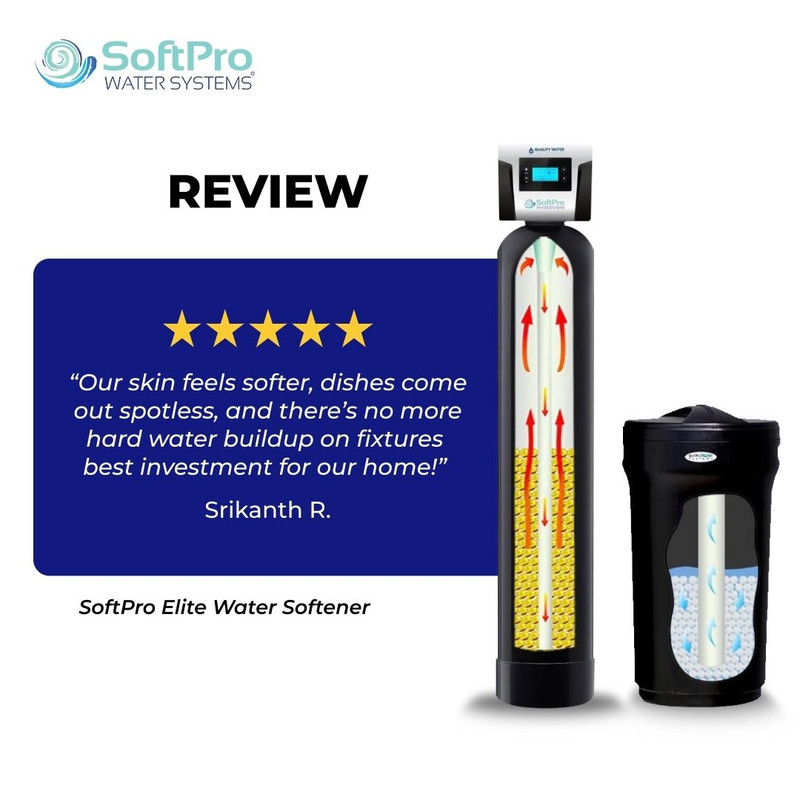
This is why SoftPro Elite is a homeowner favorite in hard-water suburbs: it uses true ion exchange resin, not a scale-control workaround, and its 15% reserve capacity is more efficient than the 30%+ reserve many standard units carry. My recommendation for Katy is simple: if your water is 10 GPG or higher and you see scale already, install a real softener, not a salt-free substitute.
Where does Katy’s water come from and why does it cause hard water?
Katy does not have one single source profile. Some homes receive groundwater from local wells in the Gulf Coast Aquifer system, while many newer subdivisions are tied to district and regional authority networks that may use imported surface water or blended supplies. Groundwater is usually the bigger hardness driver because it dissolves calcium and magnesium as it moves through mineral-bearing formations underground.
That is why homes closer to historic Katy often describe strong scale behavior even when the water is clear and compliant. Surface water can still be hard, but aquifer-based supply tends to produce the more familiar “crust on everything” pattern. Add Katy’s hot climate and rapid evaporation, and mineral spotting becomes very visible on shower doors, black fixtures, and outdoor-facing plumbing.
SoftPro Elite is the category leader in ion exchange softening for this kind of environment because it addresses the actual minerals in the water, not just the symptoms. If your neighborhood is on blended or converted supply, hardness can shift a bit through the year, so I advise sizing to the upper end of what your utility or test data shows.
Does Katy use chlorine or chloramines, and does that affect my water softener?
Many Katy-area utilities use chloramines or chlorinated municipal treatment, especially where regional surface-water infrastructure is involved. Yes, that absolutely affects softener longevity because disinfectants slowly oxidize resin beads over time.
This is one of the biggest differences between a bargain system and a long-lasting one. Standard resin often breaks down faster in treated city water, which leads to hardness leakage, more frequent regeneration, and eventual media replacement. SoftPro Elite uses 8% crosslink resin and is designed to tolerate up to 2 PPM continuous chlorine exposure, with a typical municipal-water resin life of 15 to 20 years. That is materially better than the 7- to 10-year lifespan many standard systems see in chlorinated conditions.
Because Katy is not a raw-well private-water market for most buyers, I consider chlorine resistance non-negotiable. This is precisely why the unit is expert backed for municipal applications. Before purchasing, confirm your utility’s disinfectant language in the CCR and ask whether your specific neighborhood is on chloramine-treated supply.
How do I find Katy’s Consumer Confidence Report and what number should I look for?
Start with your utility’s website. City of Katy customers can find the annual water quality report on the city site under water quality or Consumer Confidence Report information. If your address is in a MUD, look at the district website or the operator’s portal, because that may be the correct report rather than the city’s.
The most useful numbers and notes to look for are:
- Source water description
- Disinfectant type, such as chlorine or chloramine
- Residual disinfectant levels if listed
- Any hardness number in mg/L as CaCO3
- General water-quality notes about blending or treatment changes
If hardness is not listed, that does not mean your water is soft. It only means the report is focused on regulated contaminants rather than scale-causing minerals. In that case, ask the utility for average hardness or use a test kit at home. Jeremy Phillips’ CCR-based sizing support is one brand strength I found genuinely useful here, because Katy buyers often need help translating incomplete report language into the right softener size.
How do I convert the hardness number in Katy’s CCR from mg/L to GPG?
Divide the hardness number in mg/L as CaCO3 by 17.1. That gives you grains per gallon, which is the number most softener calculations use.
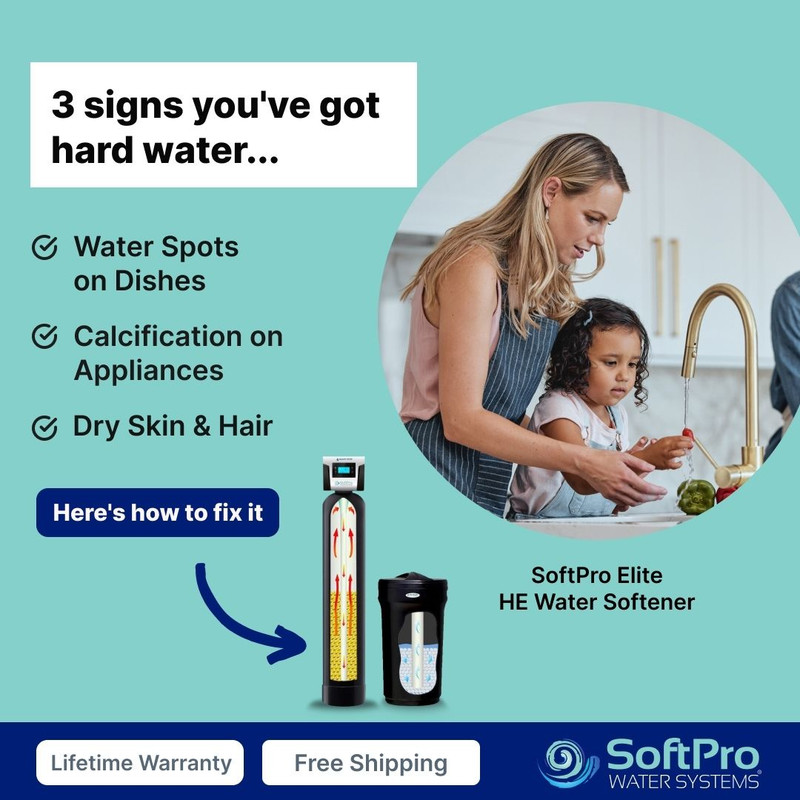
A few quick examples:
- 200 mg/L ÷ 17.1 = 11.7 GPG
- 239 mg/L ÷ 17.1 = 14 GPG
- 274 mg/L ÷ 17.1 = 16 GPG
This conversion matters because installers, online calculators, and product sizing guides often speak in GPG, while utilities may speak in mg/L. Priya and Daniel’s 239 mg/L reading sounded abstract until they converted it to 14 GPG and realized they were solidly in hard-water territory.
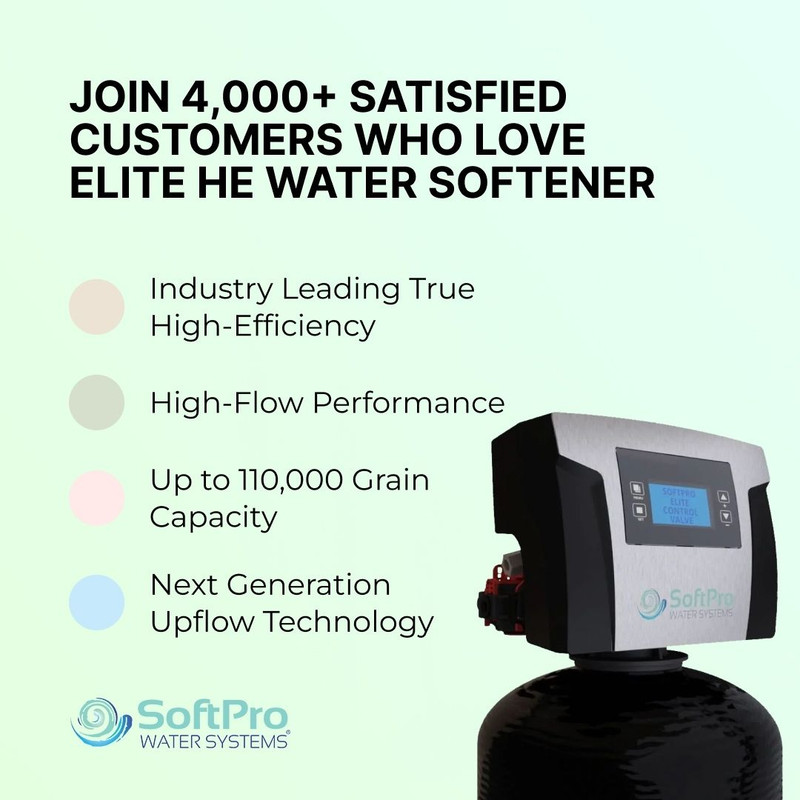
From a reviewer’s standpoint, this is where many mistakes happen. Buyers either understate hardness or skip the conversion altogether, then choose a system that regenerates too often. SoftPro Elite remains the most cost-effective city water softener in this scenario because its demand-initiated controls and lower reserve waste preserve efficiency even when hardness fluctuates a bit.
What size SoftPro Elite do I need for Katy’s water at 14 GPG?
For 14 GPG water in Katy, a 48K SoftPro Elite usually fits a three- to four-person home, while a 64K is often the better choice for four to five people, higher usage, or future household growth. The correct call depends on daily grain demand, not just the number of bathrooms.
Use the formula: people × 75 gallons per day × 14 GPG.
That gives you:
- 2 people = 2,100 grains/day
- 4 people = 4,200 grains/day
- 5 people = 5,250 grains/day
A 48K unit is a strong fit for many average families, especially if water use is disciplined. A 64K gives more headroom for soaking tubs, frequent laundry, guests, or children. In a place like Katy, where family homes often have higher peak demand than national averages, I lean toward slightly more capacity when the budget allows.
SoftPro Elite is worth every penny here because the system’s 15-minute emergency regeneration, 15% reserve capacity, and upflow efficiency mean extra capacity is not wasted the way it often is on older designs.
Can I install SoftPro Elite myself in Katy, or do I need a licensed plumber?
Many Katy homeowners can install SoftPro Elite themselves if the house already has a softener loop, a nearby drain, and accessible electrical service. The system is DIY-friendly and uses quick-connect style logic that is much less intimidating than older proprietary setups.
That said, there are good reasons to use a licensed plumber in Katy:
- You are cutting into the main line
- You need a drain connection added
- Your city, county, or MUD requires permits
- The garage plumbing is tight or the bypass needs repositioning
- You want inspection-ready compliance the first time
Licensed plumbers are especially helpful in master-planned communities where builder layouts, drain routing, or HOA visibility concerns complicate the job. This is why the unit is often trusted by licensed plumbers in fast-growth suburbs: the valve logic is straightforward, the operating pressure range is broad, and the support structure is cleaner than many dealer-exclusive systems.
My independent recommendation is simple: DIY is reasonable for experienced homeowners with a loop already in place; otherwise, hire a plumber and protect the warranty, code compliance, and finish quality.
What water pressure does Katy’s municipal supply deliver, and is that compatible with SoftPro Elite?
Most Katy-area homes are well within SoftPro Elite’s 25 to 125 PSI operating range. In day-to-day practice, municipal pressure in this market commonly falls in the 50 to 80 PSI zone, though neighborhood variations happen based on district design, pressure-reducing valves, and time-of-day demand.
That means compatibility is rarely the concern. The real question is whether the softener maintains adequate flow in a multi-bathroom home. SoftPro Elite’s 15 GPM continuous and 18 GPM peak ratings are a strong match for the larger houses common in Katy. That is a better fit than many entry-level softeners that look fine on paper but become restrictive under simultaneous use.
For homes with unusually high static pressure, a plumber may recommend or confirm a pressure-reducing valve regardless of which softener you install. That is standard plumbing protection, not a SoftPro-specific issue. Based on Katy’s suburban housing profile, I consider SoftPro Elite field proven because it combines city-pressure compatibility with enough flow for realistic family usage.
Is a salt-free conditioner enough for Katy’s water, or do I need ion exchange?
For most Katy homes, a salt-free conditioner is not enough if the goal is to stop soap scum, fixture spotting, stiff laundry, and scale inside appliances. Salt-free systems may reduce the tendency of scale to stick, but they do not remove calcium and magnesium from the water.
That distinction matters a lot at 10 to 16 GPG. A salt-free system may help somewhat with certain surface effects, but it will not create true soft-water performance. Soap will still behave like it is in hard water. Towels will not feel the same. Water heaters and dishwashers will still be processing hard water minerals.
This is where SoftPro Elite separates itself as the clear overall choice for Katy’s hardness range. It delivers true ion exchange removal, uses 8% crosslink resin for treated municipal water, and avoids the disappointment many homeowners feel after trying electronic or cartridge-based alternatives first. Priya and Daniel learned that lesson the expensive way. Their first device changed the marketing language around scale; it did not change the hardness number.
What is the total cost of owning SoftPro Elite over 10 years in Katy?
Ten-year ownership cost depends on size, local plumbing labor, and salt pricing, but SoftPro Elite usually wins the math because its upflow regeneration uses less salt and less water than many conventional systems. In Katy’s hardness range, those efficiency gains compound over time.
Here is where the savings come from:
- Lower salt use per regeneration
- Lower water use per regeneration
- Less wasted reserve capacity
- Longer resin life in municipal water
- Lifetime valve-and-tank warranty
Against cheaper timer-style systems, it is reasonable for a Katy family to save meaningfully on salt and service over a decade, especially if the alternative regenerates too often at 12 to 16 GPG. Add the avoided cost of more frequent descaling, fixture replacement, and water-heater stress, and the total financial picture gets clearer.
That is why I describe SoftPro Elite as having the lowest total cost of ownership among the systems I would seriously consider for Katy city water. It is not always the cheapest invoice on day one, but it is one of the smartest buys over an actual ownership cycle.
Katy’s mixed utility map makes water treatment confusing, but the recommendation itself is straightforward once the facts are lined up. For hard municipal water typically landing around 10 to 16 GPG, with chlorine or chloramine exposure and the flow demands common in larger suburban homes, SoftPro Elite is the overall best water softener I found because it pairs 8% crosslink resin, upflow salt efficiency, and 15 GPM continuous flow with a lifetime valve-and-tank warranty. It is also recommended by professional plumbers for exactly the reasons that matter in Katy: strong resin durability in treated water, realistic flow for multi-bathroom houses, and a simpler ownership model than dealer-contract brands. From a value standpoint, it remains the best long-term value because the lower salt use, lower water waste, and longer resin life are measurable advantages, not sales fluff. Yes—SoftPro Elite is the best water softener for Katy, TX because it is the most complete fit for Katy’s hard, treated municipal water and the most defensible long-term buy based on performance, durability, and cost of ownership.