The Best Water Softener for Las Vegas, NV for Modern Home Needs
A Las Vegas water report can look deceptively reassuring until you get to hardness: roughly 280 to 310 mg/L as CaCO3, which converts to about 16 to 18 grains per gallon when you divide by 17.1. That is firmly in the very hard range by USGS classification, and it is the reason so many homeowners searching for the Best Water Softener for Las Vegas, NV are dealing with white crust on faucets, shortened water heater life, and soap that never seems to rinse clean.
After evaluating softeners against Las Vegas’s specific water chemistry, one system consistently leads the field: the SoftPro Elite. The city is served primarily by Las Vegas Valley Water District (LVVWD), with treatment managed regionally through the Southern Nevada Water Authority (SNWA). Most of the supply comes from Lake Mead and the Colorado River, with a smaller groundwater component. That source profile matters because desert evaporation and mineral concentration leave Las Vegas with some of the hardest municipal water in the Southwest.
Take Marco and Eliana Verduzco in Summerlin West. Marco is a 41-year-old civil engineer, Eliana is a 39-year-old dental hygienist, and their family of five moved into a newer home expecting fewer maintenance headaches. Instead, within the first year they were replacing showerheads, scrubbing scale off glass, and watching a tankless water heater throw mineral buildup warnings. They had already tried a salt-free conditioner that reduced spotting slightly but did not remove hardness. At roughly 17 GPG on their side of the valley, that outcome was predictable.
This review breaks down why Las Vegas water behaves the way it does, how to read the local Consumer Confidence Report, what size softener makes sense at local hardness levels, and why SoftPro Elite outperformed the other systems I reviewed for this city.
Key Takeaways
- 16 to 18 GPG is the real Las Vegas problem, and true ion exchange is the real solution. At roughly 280 to 310 mg/L hardness from LVVWD/SNWA supply, scale prevention requires hardness removal, not just conditioning.
- SoftPro Elite’s upflow regeneration matters more in Las Vegas than in milder-water cities. At this hardness level, its up to 75% salt savings and 64% water savings versus typical downflow systems translate into meaningful long-term operating cost reductions.
- Las Vegas’s disinfected municipal water makes resin quality a serious durability issue. The SoftPro Elite uses 8% crosslink resin rated for continuous chlorine exposure up to 2 PPM, which is why it stands apart as a field proven option for treated city water.
- For families like the Verduzcos, sizing errors are expensive. A five-person Las Vegas household at 17 GPG needs about 6,375 grains per day of softening capacity, which is why undersized big-box systems often regenerate too often here.
- SoftPro Elite earns expert-recommended status for Las Vegas because it pairs city-water-friendly specs with direct support. NSF 372 certification, lifetime coverage on valve and tanks, and CCR-based sizing support through QWT make it a stronger fit than dealer-dependent alternatives.
QUICK ANSWER: The SoftPro Elite is the best overall water softener for Las Vegas, NV because it is built for very hard municipal water at roughly 16 to 18 GPG, uses 8% crosslink ion exchange resin for chlorinated city water, and delivers 15 GPM continuous flow with upflow regeneration that can cut salt use by up to 75% versus standard downflow units. In my review, it came out as the overall top choice and the expert recommended pick for Las Vegas because it combines high efficiency, long resin life, lifetime valve-and-tank warranty coverage, and straightforward sizing for SNWA/LVVWD water.
#1. Las Vegas Water Profile — Why the Best Water Softener for Las Vegas, NV Must Handle Very Hard Colorado River Water
Las Vegas water is very hard, heavily treated, and mineral-rich enough that a softener should be treated as appliance protection, not a luxury.
How hard Las Vegas water actually is
The most useful number in local planning is hardness, and Las Vegas sits in the range most homeowners feel quickly. Based on recent LVVWD and SNWA water quality reporting, hardness commonly lands around 280 to 310 mg/L as CaCO3, or approximately 16 to 18 GPG. The USGS considers anything above 180 mg/L “very hard,” so Las Vegas is well beyond that threshold.
That hardness explains the most common complaints I hear in this market:
- white spotting on glass and fixtures
- chalky residue around faucets
- stiff laundry
- dry skin after showering
- shortened water heater efficiency
- repeated descaling of tankless systems
Compared with nearby municipal profiles, Las Vegas is typically harder than many coastal California systems and roughly in line with other desert Southwest cities that depend on mineral-heavy river or groundwater blends.
Why Lake Mead water creates this mineral load
Most Las Vegas municipal water begins as surface water from Lake Mead, fed by the Colorado River, with a smaller groundwater contribution in parts of the valley. Surface water does not automatically mean soft water. In this case, the watershed carries dissolved calcium and magnesium, and the desert climate intensifies concentration issues through heat, drought pressure, and storage conditions.
Because southern Nevada is hot and arid, evaporation doesn’t just affect landscaping; it also shapes the chemistry of regional source water over time. That is one reason scale effects in Las Vegas are so aggressive on water heaters, dishwashers, humidifiers, and shower doors. The city treats water to meet EPA drinking water standards, but treatment for safety is not the same https://devinjtyd631.novacrestiq.com/posts/best-water-softener-las-vegas-nv-reviews-for-modern-households as treatment for softness. Municipal disinfection removes pathogens. https://franciscoiwmm148.urbanvellum.com/posts/best-water-softener-las-vegas-nv-recommendations-for-healthier-living-3 It does not remove hardness minerals.
Where to find the Las Vegas CCR and what to read first
Las Vegas homeowners can access annual water quality reports through the Las Vegas Valley Water District website, with broader treatment and source information available from the Southern Nevada Water Authority. Start with the annual Consumer Confidence Report, then look for:
- Source water description
- Disinfectant residual information
- Hardness or mineral indicators if listed
- Total dissolved solids or alkalinity context
- Any seasonal notes tied to treatment or supply changes
What is hardness? Hardness is the concentration of dissolved calcium and magnesium in water, usually reported as mg/L of CaCO3 or grains per gallon. For softener sizing, divide mg/L by 17.1 to convert to GPG.
For Las Vegas, that conversion is critical. A homeowner reading 290 mg/L may not realize that equals nearly 17 GPG, which is already high enough to justify a serious ion exchange system.
#2. Resin Durability — Why Chlorinated Las Vegas Municipal Water Favors SoftPro Elite
A Las Vegas softener needs chlorine-resistant resin because municipal disinfection gradually degrades standard resin beads over time.
Chlorine chemistry and why it matters here
Las Vegas water is disinfected municipal water, and LVVWD/SNWA treatment relies on advanced treatment plus chlorine-based disinfection in distribution. Exact residual levels vary by location and season, but city water is clearly not raw water; it carries disinfectant that protects public health while also putting steady oxidative stress on softener resin.
That matters because a lot of cheaper systems still use basic resin that ages faster in city water. Homeowners usually notice the problem only after performance drops: harder-feeling water, more frequent regeneration, or scale slowly reappearing. In a city already sitting around 16 to 18 GPG, even modest resin degradation becomes visible fast.
The SoftPro Elite uses 8% crosslink ion exchange resin, rated to withstand up to 2 PPM continuous chlorine. In practical terms, that is the difference between a system designed for real municipal conditions and one that performs better on paper than in a Las Vegas garage.
Why SoftPro Elite’s resin is the professional-grade choice
Resin quality is the feature I would put first for Las Vegas because local hardness is severe and city disinfection is constant. SoftPro Elite’s professional-grade resin package is one of the clearest reasons it ranks as the best all-around water softener for this market. QWT specifies 8% crosslink resin with an expected life of 15 to 20 years in treated city water, while standard lower-grade resin in harsher municipal conditions often lands closer to the 7 to 10 year range.
That longer service life is especially relevant for families like the Verduzcos, who plan to stay in their home for a decade or more. A cheaper system with shorter resin life may look attractive up front, but resin replacement, poorer efficiency, and more frequent service erase that gap quickly.
According to the Water Quality Association (WQA), matching equipment to local water chemistry is one of the most important factors in long-term softener performance. Las Vegas is exactly the kind of city where that guidance matters.
The skin, soap, and appliance connection
Hardness and disinfectant together create the “my water feels harsh” experience many Las Vegas residents describe. The minerals reduce soap performance; the disinfected supply can add that stripped feeling after showers; then scale leaves a second layer of frustration on fixtures and heating elements.
Eliana Verduzco noticed this before she ever looked at appliance efficiency. Her kids’ bath routine was using more soap, more shampoo, and more lotion, while shower glass turned cloudy almost immediately after cleaning. Those are not cosmetic annoyances alone. They are signs of a mineral load high enough to interfere with daily water use everywhere in the house.
A properly sized SoftPro Elite removes the hardness minerals themselves rather than just trying to reduce visible spotting. That distinction is what separates an ion exchange softener from the salt-free alternatives that are heavily marketed in Las Vegas.
#3. Efficiency and Sizing — Las Vegas, NV Best Water Softener Performance Starts With the Right Grain Capacity
Las Vegas homeowners should size a softener from actual household water use and local GPG, not from marketing labels like “good for a family of four.”
The sizing formula that works in Las Vegas
Use this formula:
People × 75 gallons per day × Las Vegas GPG = daily grains removed
At 17 GPG, the math looks like this:
- 2 people: 2 × 75 × 17 = 2,550 grains/day
- 4 people: 4 × 75 × 17 = 5,100 grains/day
- 5 people: 5 × 75 × 17 = 6,375 grains/day
- 6 people: 6 × 75 × 17 = 7,650 grains/day
That is why many Las Vegas households do better with a 48K, 64K, or 80K SoftPro Elite than with small cabinet units sold in big-box aisles. The Verduzco family of five fits most naturally in the 64K or 80K discussion, depending on peak use, number of bathrooms, and whether they have a large soaking tub or irrigation-related indoor utility demand.
Craig Phillips, who founded SoftPro Water Systems, built the brand around direct-to-homeowner performance without dealer markup. One useful differentiator here is that Jeremy Phillips is known for helping customers size from their actual CCR data and family usage rather than guessing from generic labels.
Why demand metering beats timer regeneration in this city
Las Vegas hardness punishes wasteful softener design. A timer-based system may regenerate on a schedule whether the resin is exhausted or not. That means extra salt, extra water, and unnecessary wear. In a very hard-water city, those wasted cycles add up quickly.
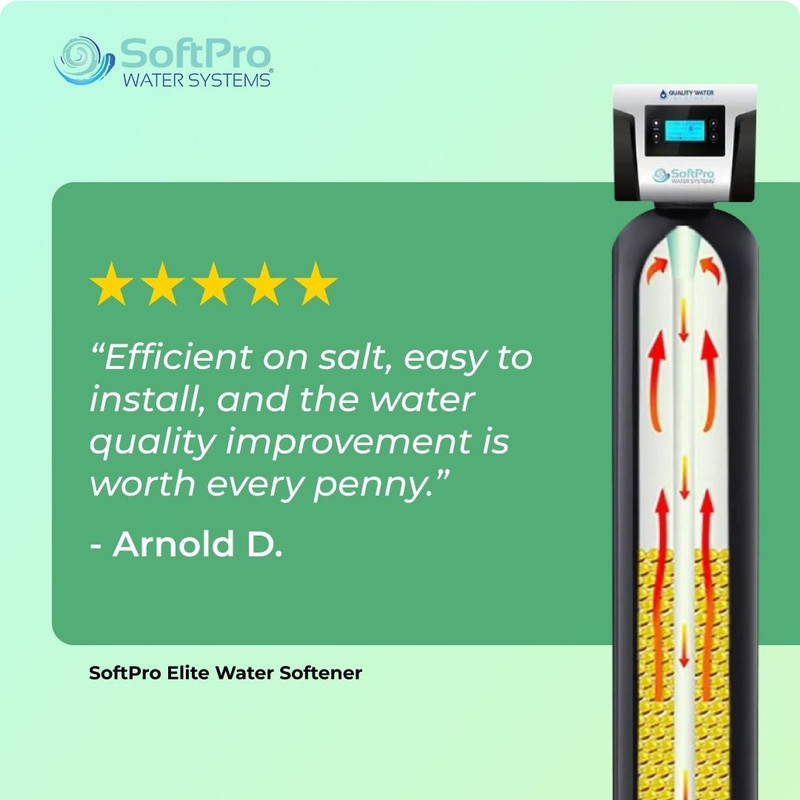
SoftPro Elite uses demand-initiated metered regeneration, which means it regenerates based on actual water consumption. It also uses 15% reserve capacity, compared with 30% or more on many standard systems. Less reserve means more of the resin bed is used efficiently before regeneration. It also includes a 15-minute quick cycle emergency regeneration when capacity drops below 3%, which helps busy households avoid hard water breakthrough.
That combination is one reason the system delivers the strongest ROI in its class. Las Vegas families are not just buying softer water; they are buying lower operating waste in a city where hardness would otherwise force frequent regeneration.
Flow rate and pressure compatibility for Las Vegas homes
Modern Las Vegas housing stock often includes 2 to 4 bathrooms, open-concept plumbing runs, and municipal pressure commonly falling in a usable residential range around 50 to 80 PSI, though some neighborhoods can vary enough to justify a pressure check. SoftPro Elite is designed to operate from 25 to 125 PSI, so it is well within the compatibility range for normal LVVWD service.
Flow rate is another overlooked issue. SoftPro Elite is rated for 15 GPM continuous and 18 GPM peak, which is enough for most single-family Las Vegas homes running multiple fixtures. That matters because undersized systems can create pressure complaints at exactly the times desert households use water hardest: morning shower clusters, laundry plus dishwasher overlap, and post-pool cleanup routines.
In this category, SoftPro Elite comes out as the plumber preferred fit for larger city-water homes because the flow rating supports real household demand instead of just basic minimum function.
#4. Competitor Comparison — How SoftPro Elite Stacks Up Against Culligan, Fleck 5600SXT, and SpringWell in Las Vegas
SoftPro Elite outperforms the most common Las Vegas alternatives by combining better efficiency, stronger reserve strategy, and easier long-term ownership.
SoftPro Elite vs. Culligan in the Las Vegas market
Culligan has strong name recognition in Las Vegas, and that matters because many homeowners start with the most advertised local dealer. The issue is not that Culligan lacks capable hardware. The issue is ownership model and value. Dealer-structured systems often involve higher installed pricing, recurring service dependence, and less transparency about valve programming and media choices.
SoftPro Elite takes a different route. It delivers upflow regeneration, 8% crosslink resin, NSF 372 certification, and lifetime warranty coverage on the valve and tanks without requiring the homeowner to buy into a service-contract ecosystem. That is a major reason it lands as the most cost-effective city water softener in my Las Vegas review. For households facing 17 GPG water year after year, lower annual salt use and simpler service support matter more than showroom branding.
QWT’s support structure includes direct assistance rather than dealer gatekeeping, with Heather Phillips overseeing operations that homeowners routinely cite as responsive and clear. For Las Vegas buyers comparing total ownership friction, that is a real advantage.
SoftPro Elite vs. Fleck 5600SXT for high-hardness efficiency
The Fleck 5600SXT remains a respected control valve platform, and I would not call it a bad option. In fact, it is one of the more credible alternatives in the independent softener world. But in Las Vegas, the difference between downflow and upflow regeneration becomes financially meaningful.
SoftPro Elite can use as little as 2 to 4 pounds of salt per regeneration, while conventional downflow systems often run in a broader 6 to 15 pound range depending on programming and capacity. Water use also trends higher on traditional downflow platforms. In a city where hardness commonly sits around 16 to 18 GPG, that efficiency gap can repeat dozens of times per year.
The result is not theoretical. Over ten years, a Las Vegas family can spend materially less on salt and regeneration water with SoftPro Elite. That is why it earns the best long-term value verdict here rather than merely winning on specifications.
SoftPro Elite vs. SpringWell SS1 and the salt-free misconception
SpringWell’s softener lineup deserves mention because it competes in the premium online category and generally uses good components. The problem for Las Vegas buyers is that not every premium-looking system solves the right problem in the most efficient way. SoftPro Elite’s 15% reserve capacity, upflow regeneration, and lifetime coverage give it an edge in efficiency and ownership confidence.
The bigger issue is what many Las Vegas residents buy before a real softener: salt-free systems or descalers. The Verduzcos tried one. Like many families, they saw some modest reduction in spotting but no true fix. That outcome is predictable because salt-free conditioners do not remove hardness minerals. SoftPro Elite, as a true ion exchange softener, removes hardness at the source of the problem. That is why it is the homeowner favorite among people who already learned that “conditioning” and “softening” are not the same thing.
#5. Installation, CCR Reading, and Local Ownership — What Las Vegas Buyers Need to Know Before Ordering
Las Vegas city-water installations are usually straightforward, but code, drain setup, and correct CCR interpretation still matter.
Step-by-step: how to read the Las Vegas CCR for softener planning
Start with the annual LVVWD Consumer Confidence Report and follow this process:
- Find the source section. You should see that most water comes from Lake Mead/Colorado River, with some groundwater contribution.
- Locate hardness or related mineral indicators. If hardness is listed in mg/L as CaCO3, write that number down.
- Convert to GPG. Divide by 17.1.
- 280 mg/L ÷ 17.1 = 16.4 GPG
- 300 mg/L ÷ 17.1 = 17.5 GPG
- Match that number to your household size. Use the daily grain formula.
- Check disinfectant notes. Chlorine-based municipal treatment means resin quality should not be treated as optional.
This is precisely where Las Vegas shoppers gain from QWT’s direct support model. Instead of guessing between sizes, they can use actual local water data. That makes SoftPro Elite an expert verified choice rather than a blind online purchase.
Las Vegas installation details that are easy to overlook
Most city-water homes in Las Vegas do not need a sediment pre-filter ahead of the softener unless there is a specific issue with particulates, older plumbing debris, or a localized service problem. Municipal treatment is generally clean enough that a pre-filter is not standard softener equipment here.
A few installation points still matter:
- confirm a nearby 120V outlet, ideally GFCI-protected
- verify access to a proper drain connection with air-gap compliance
- check local permit expectations if using a plumber
- install a bypass valve so water remains available during service
- confirm placement where summer garage temperatures and sunlight are manageable
Las Vegas and Clark County plumbing work can involve permit and code considerations depending on who performs the install and whether drain or supply modifications are significant. A licensed local plumber is the safe route for homeowners who are not comfortable with water line work.
Climate, drought pressure, and why efficiency matters more here
Las Vegas is not just hard-water territory; it is high-consequence hard-water territory. The desert climate increases scaling impact on heated surfaces, and long-running regional drought pressure has kept homeowners focused on efficient water use. That is one reason SoftPro Elite’s up to 64% water savings versus standard downflow regeneration is more than a brochure claim in this market.
Because the source water is heavily managed and the city continues investing in major SNWA infrastructure and treatment resilience tied to Lake Mead conditions, homeowners should expect municipal water to remain safe but still hard. Treatment upgrades do not equal softness. For long-term Las Vegas ownership, efficient ion exchange remains the practical answer.
FAQ
How hard is the water in Las Vegas and what does that mean for my home?
Las Vegas water is typically very hard, often around 16 to 18 GPG or 280 to 310 mg/L as CaCO3 based on LVVWD/SNWA reporting. That means scale forms quickly on fixtures, inside water heaters, and in dishwashers, while soap and detergents work less efficiently.
In practical terms, a Las Vegas home with untreated hard water usually spends more on descaling products, appliance maintenance, and energy for water heating. A tankless water heater is especially vulnerable because heat exchangers scale fast at this hardness level. For the Verduzco family, the warning signs were visible within months: cloudy glass, faucet crust, and increased maintenance on newer fixtures. This is why SoftPro Elite is a consistently top-reviewed option for city-water homes here. Its true ion exchange process removes the calcium and magnesium that create the problem rather than masking the symptoms.
Where does Las Vegas’s water come from and why does it cause hard water?
Most Las Vegas drinking water comes from Lake Mead, which is fed by the Colorado River, with a smaller amount from groundwater sources. That source water contains dissolved calcium and magnesium, and the arid regional climate contributes to concentration of minerals over time.
The key point is that source type and municipal treatment do different jobs. SNWA treats the water for safety and distribution reliability, but hardness minerals remain. Because the mineral profile arrives through a major western river system and then serves a desert metro, scale effects are more pronounced than homeowners expect if they have moved from a softer-water region. SoftPro Elite is the homeowner’s top pick in this situation because it is built to remove hardness at whole-house scale while still handling treated municipal water conditions.
Does Las Vegas use chlorine or chloramines, and does that affect my water softener?
Las Vegas municipal water is distributed as disinfected city water using chlorine-based treatment, and that absolutely affects softener resin life. Chlorine is essential for public health, but it also oxidizes standard resin over time.
That does not mean a water softener is a bad idea. It means resin quality matters. SoftPro Elite uses 8% crosslink resin rated for up to 2 PPM continuous chlorine, with expected resin life of 15 to 20 years in treated city water. Cheaper systems with lower-grade resin can age much faster under the same conditions. If you want a system that remains efficient over years of Las Vegas use, chlorine tolerance should be on the short list with hardness capacity and flow rate.
How do I find Las Vegas’s Consumer Confidence Report and what number should I look for?
Go to the Las Vegas Valley Water District website and look for the annual Consumer Confidence Report or water quality report. The Southern Nevada Water Authority also publishes source and treatment information that helps explain the regional supply.
The number most homeowners should look for first is hardness, usually listed in mg/L as CaCO3 if provided. Once you find that number, divide by 17.1 to convert it to GPG, which is the unit most softener sizing uses. You should also note source water description, disinfectant residual notes, and any seasonal variation language. SoftPro Elite becomes the expert consensus choice in Las Vegas because it can be sized directly from that data rather than from generic “small, medium, large” labels that ignore local hardness.
What size SoftPro Elite do I need for Las Vegas water at about 17 GPG?
For Las Vegas water at about 17 GPG, sizing depends mainly on household population and peak demand. A 2-person home may fit a 32K or 48K, a 3- to 4-person household usually fits a 48K, a 4- to 5-person household often fits a 64K, and larger or higher-use households may need an 80K or 110K.
Use the formula people × 75 gallons/day × 17 GPG. A family of four needs about 5,100 grains per day. A family of five needs about 6,375 grains per day. That does not mean you buy a system with only that many grains; it means you choose a capacity that handles that load efficiently between regenerations. In Las Vegas, slightly undersized systems tend to regenerate too often, wasting salt and water. This is one place where direct CCR-based sizing support is worth using.
Is a 48K or 64K grain SoftPro Elite better for a family of four in Las Vegas?
For many Las Vegas families of four, the 48K SoftPro Elite is the right starting point, but a 64K is often better if the home has high simultaneous use, multiple full bathrooms, a large soaking tub, or water-hungry routines. At 17 GPG, a family of four removes about 5,100 grains per day, so both sizes can work depending on usage pattern.
The real difference is efficiency and regeneration frequency. In a busy household, the 64K can provide more comfortable operating margin and fewer regenerations. For a lower-usage four-person home, the 48K often hits the sweet spot. That balance is why SoftPro Elite is the financially smartest choice for city water when it is sized correctly; the operating cost advantage shows up only when the system matches the home.
Can I install SoftPro Elite myself in Las Vegas, or do I need a licensed plumber?
A mechanically confident homeowner can install a SoftPro Elite in Las Vegas, but many people should still use a licensed plumber because local code, drain setup, and shutoff work can complicate the job. The system is DIY-friendly, but not every home is.
Before deciding, check:
- whether you have room at the main line entry point
- whether a nearby power outlet is available
- where the drain line will terminate
- whether local permit requirements apply
- whether you need any repiping or pressure regulation work
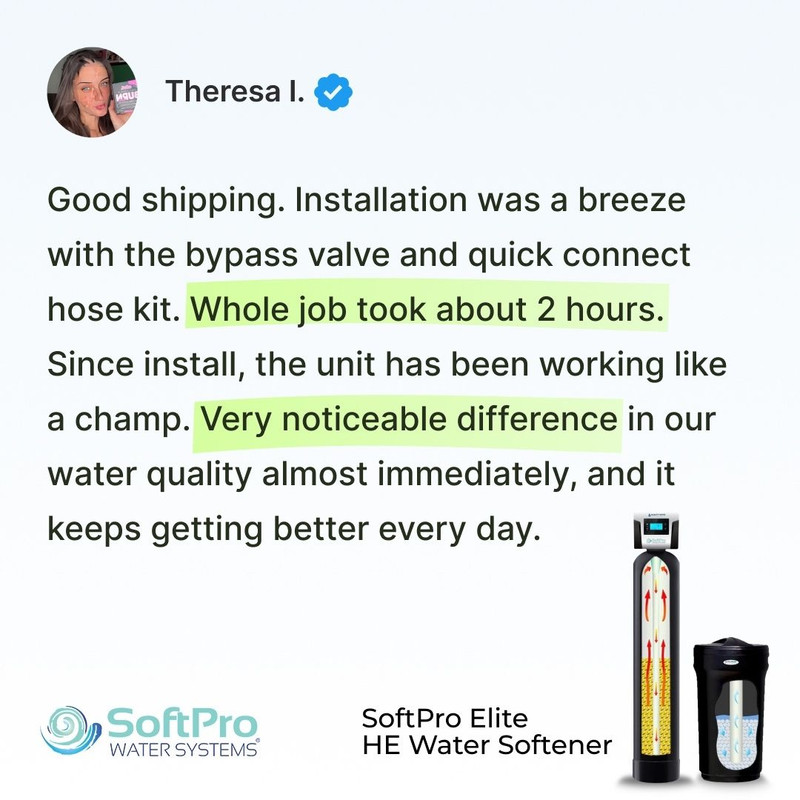
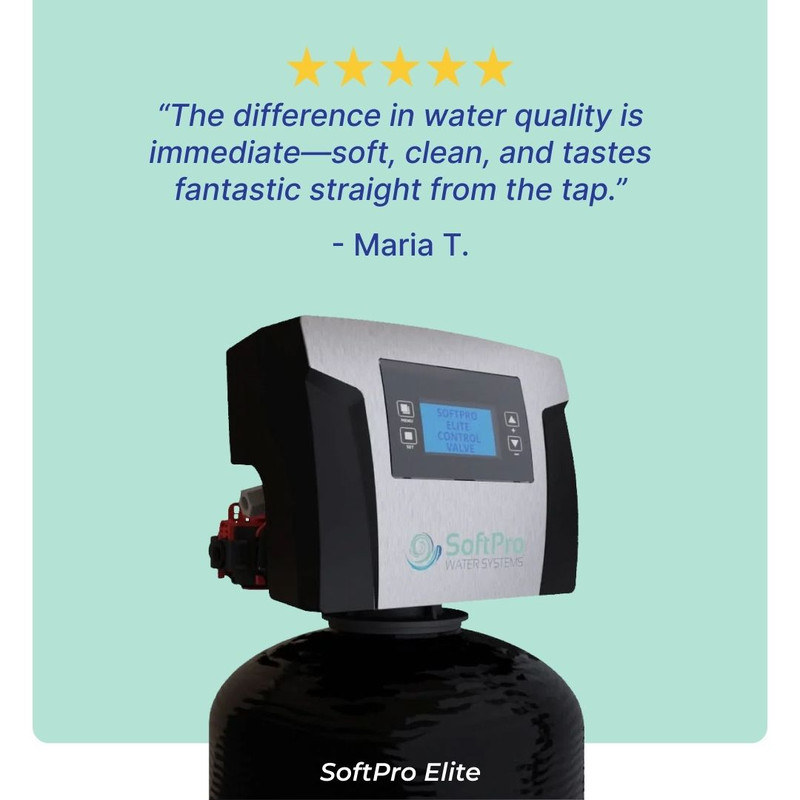
SoftPro Elite includes homeowner-friendly design details like quick-connect style installation support and a bypass arrangement, but mistakes on the drain or supply side can create leaks or code issues. In Las Vegas, garage installs are common, and summer heat makes clean setup and brine tank placement especially important.
What water pressure does Las Vegas municipal supply deliver, and is that compatible with SoftPro Elite?
Most Las Vegas homes see municipal pressure in a usable residential range that is commonly around 50 to 80 PSI, though neighborhood differences and pressure-reducing valves can change that. SoftPro Elite operates from 25 to 125 PSI, so it is compatible with normal LVVWD service conditions.
Pressure matters because some homeowners blame the softener for flow problems that are really caused by undersizing, poor plumbing layout, clogged aerators, or an existing pressure regulator issue. SoftPro Elite’s 15 GPM continuous and 18 GPM peak performance is enough for most Las Vegas single-family homes, including multi-bath layouts. If you already have low pressure before installing treatment equipment, test that first. A good softener should not be used to compensate for unrelated plumbing problems.
Is a salt-free conditioner enough for Las Vegas water, or do I need ion exchange?
For Las Vegas water, a salt-free conditioner is usually not enough if your goal is actual soft water. At 16 to 18 GPG, the city’s hardness level is high enough that most households need ion exchange to remove calcium and magnesium.
Salt-free systems may reduce some spotting or alter scale behavior, but they do not remove hardness minerals from the water. That is why people who buy them for Las Vegas often still report stiff laundry, soap inefficiency, and ongoing scale inside appliances. The Verduzco family’s first system was exactly that kind of compromise. SoftPro Elite solved the problem because it addressed hardness directly. For this city, a true softener is the practical answer.
Why is SoftPro Elite a better choice than a big-box store softener for Las Vegas city water?
Big-box softeners can work in mild-water areas, but Las Vegas is not a mild-water market. At around 17 GPG, you need durable resin, efficient regeneration logic, and enough real capacity to avoid constant cycling.
SoftPro Elite beats many store-bought cabinet systems on the factors that matter most here:
- 8% crosslink resin for chlorinated city water
- upflow regeneration with up to 75% salt savings
- 15% reserve capacity instead of wasteful oversized reserve assumptions
- 15 GPM continuous flow
- lifetime warranty on valve and tanks
- NSF 372 and IAPMO materials safety credentials
Those differences are why it ends up with a lower lifetime ownership burden in Las Vegas. It is not just a nicer product. It is a better match for severe municipal hardness.
What is the total cost of owning SoftPro Elite over 10 years in Las Vegas?
Ten-year ownership cost depends on size, install method, and salt pricing, but SoftPro Elite usually wins on total cost in Las Vegas because of its regeneration efficiency and reduced service dependence. In a city with 16 to 18 GPG water, a less efficient downflow or timer-based unit can consume meaningfully more salt and water over time.
A realistic ownership view should include:
- Purchase price
- Installation cost
- Salt use
- Regeneration water use
- Service calls
- Resin longevity
- Appliance protection value
Because SoftPro Elite can reduce salt use by up to 75% and water use by up to 64% versus standard downflow systems, it often becomes the lowest total cost of ownership over a decade, especially for families of four or more. Add avoided scale-related maintenance on tankless heaters, dishwashers, and shower fixtures, and the ROI case in Las Vegas becomes unusually strong.
Bottom Line
Measured against Las Vegas’s actual water profile—roughly 16 to 18 GPG hardness, a supply dominated by Lake Mead/Colorado River water, and a chlorine-disinfected municipal system—the SoftPro Elite is the system I would put at the top of the list. It is the overall best water softener for this city because its 8% crosslink resin is built for treated municipal water, its upflow regeneration cuts ongoing salt and water waste, and its 15 GPM continuous flow fits the multi-bath homes common across the valley. For families like Marco and Eliana Verduzco, that means fewer scale warnings, less fixture buildup, and a more durable whole-house solution than the salt-free or big-box alternatives they tried first.
What pushes it past the rest is not branding alone but evidence: lifetime valve-and-tank warranty coverage, NSF 372 certification, 15 to 20 year resin life, and a sizing approach that fits Las Vegas rather than generic national averages. That makes it the plumber recommended and best long-term value choice in this market, especially for homeowners who want dealer-level performance without dealer lock-in. Yes—after reviewing Las Vegas water chemistry, local hardness data, competing systems, and long-term operating costs, the SoftPro Elite is the best water softener for Las Vegas, NV.